Weighted blankets, explained
There's a huge market for weighted blankets right now. Their popularity has skyrocketed in recent years, blowing up on social media and flooding store shelves this holiday season. There's a pretty good chance someone has already bought you one as a gift this year. So what's going on with the weighted blanket trend? Should you think about getting one for someone in your family? Let's talk about it.
Why weighted blankets are so popular
Weighted blankets have been around for a while as most occupational therapists go-to solution for helping children and adults with diagnoses such as ADHD, Autism, Down Syndrome and insomnia relax and de-stress. In time, word of the "magical" properties of weighted blankets got around to others simply wanting a way to wind down after a bout of anxiety or rough day at the office.
Of course, there's no real magic involved. What weighted blankets really do is engage the body's proprioceptive sensory system by applying comforting pressure to the legs, hips, and torso. The body responds positively to the "hugging" feeling weighted items provide. That feeling tells the brain "I'm safe and secure," allowing the user to calm themselves naturally. Add some chamomile tea and binge watching a show on Netflix, and you've got the soothing sensation that's making weighted blankets a very popular item.
Buying a weighted blanket
Ready to jump into the weighted blanket trend? Before you make the leap, here are a few things to think about.
Consult a professional
Weighted blankets can be kind of spendy. Before you drop a bunch of money on one for you or a loved one, check with a therapist, pediatrician, or doctor about whether one is right for your situation. If you're buying for a child in your family, talk with the parents first to make sure they not only want one but also know how to use it.
Age & Ability
Weighted blankets are absolutely not recommended for children under 3 years of age. The child should also have enough mobility and upper body strength to easily get out from under the blanket. This goes for older individuals, too. If grandma or grandpa have trouble getting in and out of bed or experience joint weakness, a weighted blanket may not be appropriate.
Weight & Size
The general rule on choosing how heavy a weighted blanket should be is simple: figure on 10% of the user's body weight, then add a pound or two. For example, if the user is a 40-pound child, a 5-pound blanket will work nicely. If the user is a 140-pound adult, the best choice is a 15-pound blanket.
Be mindful of how the size of the blanket, too. Every weighted blanket should get larger as weight increases. Something too small and heavy won't distribute the weight well, reducing the blanket's ability to sooth and calm. Check the sizes to ensure you find the best fit for the user.
Fabric & Style
The weight inside a weighted blanket might be the most soothing thing in the world, but it won't mean much if the exterior is uncomfortable. And if you're buying for someone with sensory processing issues, choosing the right fabric is essential.
Take some time to consider texture and feeling before you buy a weighted blanket. eSpecial Needs offers cotton weighted blankets, poly-blend and flannel options, and even a slip cover to keep you "covered" all through the night.
Using a weighted blanket
Weighted blankets look simple, don't they? They're sneaky that way, because they're actually kind of complex to use. To get the most benefit from your weighted blanket, there are several tips to keep in mind.
When introducing a weighted blanket to a child, especially one with sensory concerns, don't just lay the blanket on top of them at once, like you would with a typical blanket. Instead, start at the feet and slowly slide the blanket up their legs and on to their chest, stopping along the way to ensure the child is comfortable.
While weighted blankets are a comfort to many children, some kids really don't like the added weight. If it seems like the kiddo just isn't into it, fold it up and put it away for a while. You can always try again some other time. You might also offer it to another family who could use one (we hear they're pretty popular).
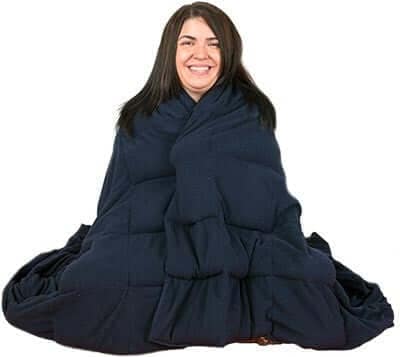
It's easy to get cozy in a weighted blanket but please, no human burritos. Never roll up in one or allow a child to do so. This can be very dangerous and can lead to entrapment or worse.
Instead, the blanket should lie flatly against the body. If the user is sitting up reading or enjoying some screen time, the blanket should lie in the lap. Some people like to pull weighted blankets up to the shoulders and that's fine, but a weighted shawl might be a better option.
Don't put the weighted blanket in the microwave. First of all, how would you even fit it in there?! Second, there's a good chance you'll melt the beads inside. That'll ruin your blanket, your evening, and possibly also your microwave.
We've got lots of weighted items here at eSpecial Needs. From weighted blankets to vests, lap pads, and even ball caps, we can give you a hand in finding the perfect weighted product for your needs. Take a look at our Weighted Blanket selection or visit our whole weighted wearables category for more.