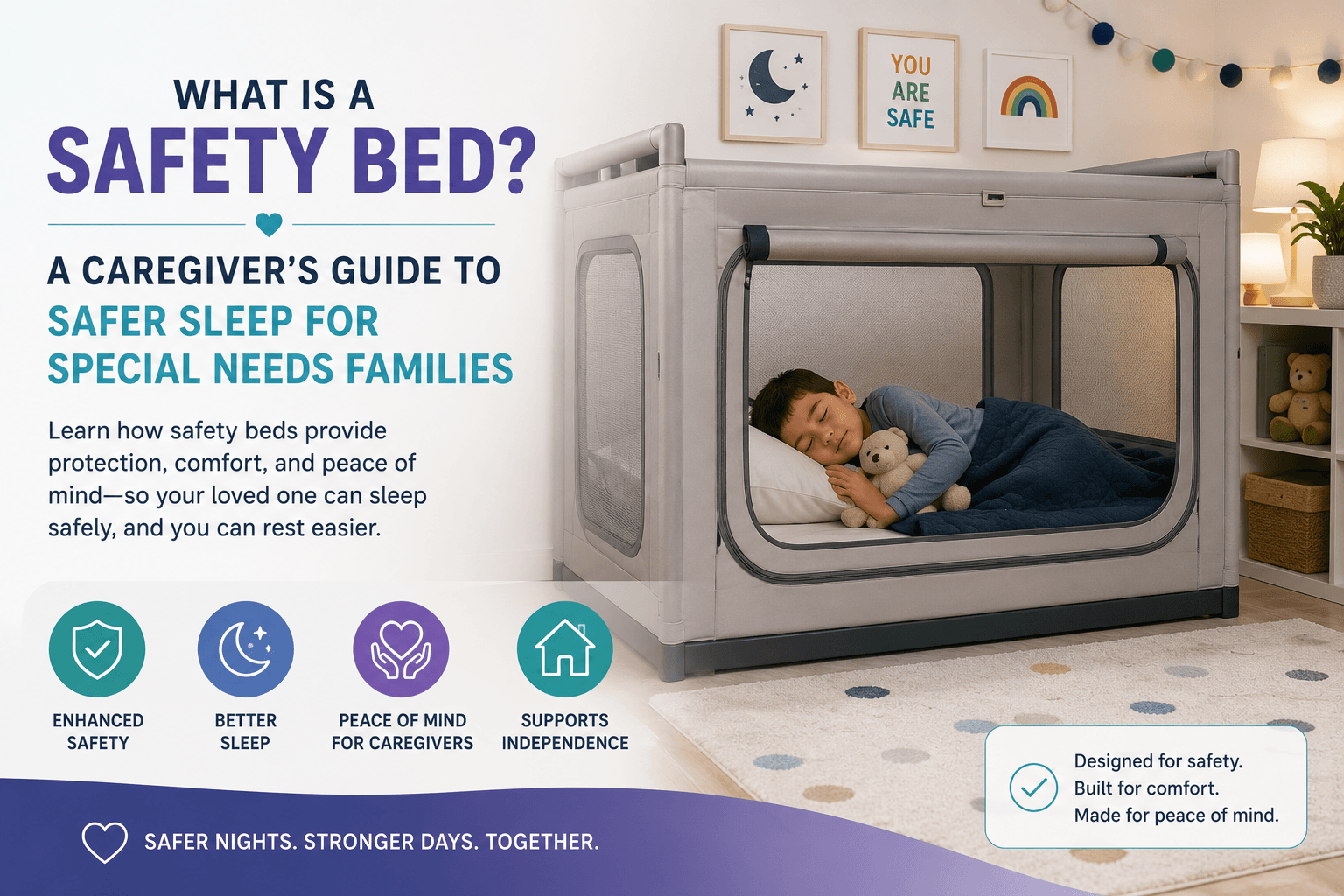

Struggling with a child over bedtime is basically a rite of passage for parents. Sometimes it feels like all the storybooks, lullabies, goodnight kisses, and sheep counting in the world just won't do the trick. And this can be especially true of children on the Autism spectrum who sometimes have to work that much harder to get comfortable enough for sleep.
Sleep is an important component to a child's health and behavioral happiness. If a child is not getting enough sleep, they don't get drowsy like adults do. Kids are more apt to be wound up and hyperactive when they're tired, which can make it difficult for them to best acclimate to their home and school environments.
What's a sleepy, somewhat frustrated parent to do? We don't have all the answers, but there are a few things you might want to try before another bedtime battle.
9 Hacks for winning bedtime

Reinforcing Routines
For any child, bedtime routines can be a crucial element of staying "“ and falling "“ asleep. For each kid, bedtimes routines will differ with their preferences. For children who are on the Autism spectrum, routines and habits can be the easiest and best way to help them acclimate to a routine of falling and staying asleep.
Visual schedules are a great way to help any child, especially ASD children, envision their bedtime routines. We found you a cute, downloadable and printable resource that you can use as a guide for their bedtime routine. If that bedtime visual schedule isn't perfect for you, consider searching "Bedtime visual schedule" on the internet to find the perfect one. If you really want to devote a lot of time to it, you could even draw out your own!
Carry that weight
Weighted blankets have become a very popular in recent years as a go-to for parents with restless children. Used for years by moms and therapists alike, they provide the proprioceptive input and sensory stimulation that some restless bodies crave, helping kids calm and quiet their mind for the best possible night's sleep.
But before purchasing a weighted blanket, there are some guidelines and rules to keep in mind. These guidelines have been derived The Weighted Blanket Guide, by Eileen Parker and Cara Koscinski.
- Always consult your pediatrician or occupational therapist before you purchase and use a weighted blanket.
- Weighted blankets are NOT recommended for use with children under 3 years of age.
- Don't put the weighted blanket in the microwave (how would you even fit it in there?!) because it'll probably melt the beads inside and that will smell really bad. Plus, now you've destroyed your weighted blanket.
- Don't roll your kids up in a weighted blanket. Just place it over their bodies and let them go to sleep gently.
- The weight of the weighted blanket should be 10% of the child's body weight, plus one extra pound. Example: if a child is 60 pounds, a 7-pound weighted blanket would be a good suggestion for weight.
If your child has sensory processing disorders, the texture and feeling of a weighted blanket can also be a determining factor. eSpecial Needs offers cotton weighted blankets, poly-blend and flannel options, and even a slip cover to keep you "covered" all through the night.
Stretching out bedtime
If you've got sensory seeker on your hands, you might try some low-key pre-bedtime physical activity to satisfy their craving for input. Stretches and bends, slow push-up or sit-up, even a little bedtime yoga can release those last bits of energy that keep kids for restful sleep.
We found this adorable animated video narrated by a calming British lady that details some simple poses and breathing exercises that can help relax their bodies and focus minds. For children that have more physical limitations, meditation and breathing exercises can be a comparable solution for quieting the mind and body.
Sleepy sounds
The silence of a dark, empty room makes lots of kids anxious about bedtime. Add the creaks old floor boards and a whistling wind just outside, and you've got an aural combination that could frighten the toughest adult.
A small CD player, MP3 player, or Bluetooth speaker playing soothing lullabies or other music at a low volume can help an anxious mind focus on something nice. White noise machines are also a great way to use sound to relax the body and mind, helping children fall"”and stay "“ asleep.
"Can I cuddle with you tonight?"
Sleeping in a parent's big bed is something that a lot of kids want to do. It's warm, safe, and filled with the people that love them most. And when they can't do that, kids ask if a parent might join them in their bed to soothe them to sleep.
Every parent has a different opinion on co-sleeping. It's an idea and practice that has worked for some and caused problems with encouraging independence for others.
Before jumping into co-sleeping, set clear boundaries for personal space and consider setting limits, then be clear about your expectations with your child. Maybe allow the child to fall asleep in your bed and then move them to their own. Cuddle with them in their bed for a while then go back to your own room when they start snoring. No matter how you go about it, take the time to create a co-sleeping plan that best for everyone.
Good Night, Sleep Tight
Use any of these techniques at your own discretion and level of comfort. You know your boundaries and your child better than anyone else, so while some of these suggestions might work for some people, it doesn't work for everyone. And that's okay.